
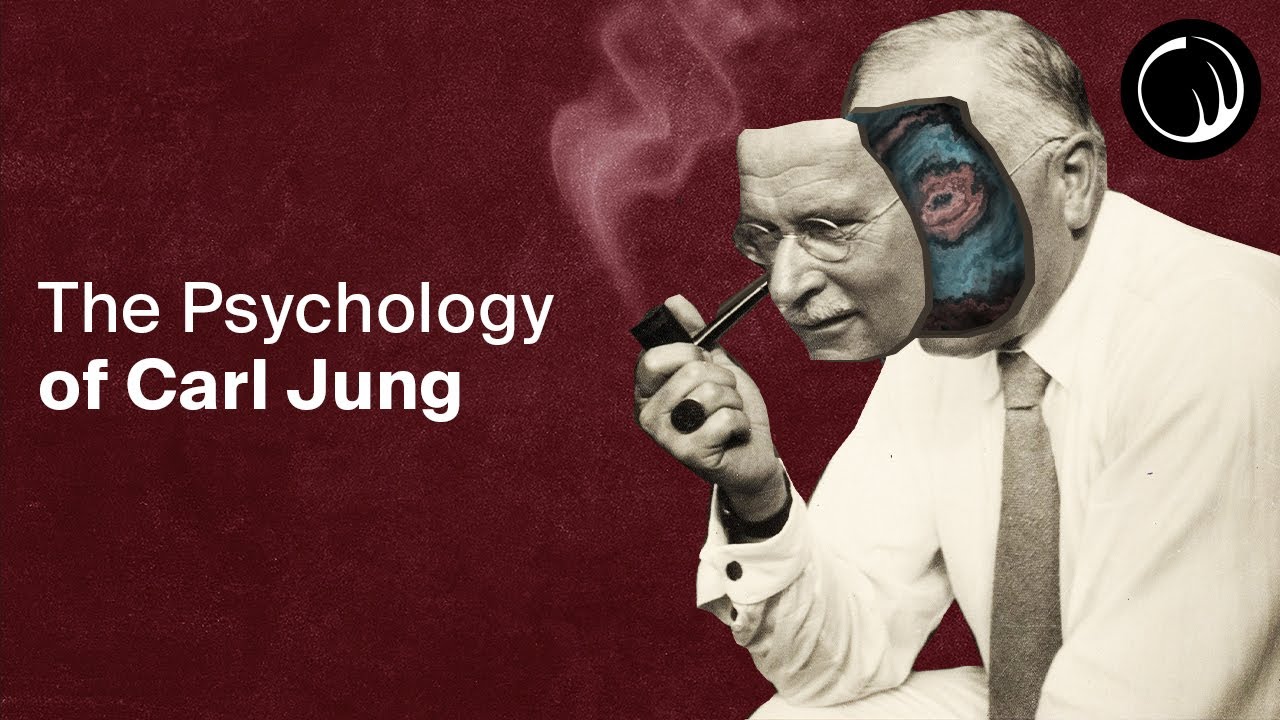
Carl Jung and Astrology: The Psychological Truth Behind the Stars
Carl Jung and Astrology: The Psychological Truth Behind the Stars
Carl Jung and Astrology: The Psychological Truth Behind the Stars
Jan 9, 2026
Jan 9, 2026
Jan 9, 2026
Carl G. Jung integrated astrology into his therapeutic practice, used it to understand his patients' psychological patterns, and defended it against critics who dismissed it as superstition. For Jung, astrology was not about predicting the future or reading horoscopes in magazines. It was a symbolic language that revealed the deepest structures of the human psyche, laying the foundation for what we now call psychological astrology.
This post explores Jung's revolutionary findings about astrology, how he connected planetary archetypes to psychological patterns, and why his work remains essential for anyone serious about understanding both astrology and themselves.
What Did Carl Jung Actually Say About Astrology?
Let's get one thing straight. Jung was a trained psychiatrist, a scientist, and a rigorous thinker who approached astrology with both skepticism and genuine curiosity.
Jung's interest in astrology emerged from his broader exploration of symbols, myths, and what he called the collective unconscious, the shared psychological inheritance of humanity that manifests in recurring patterns across cultures and time periods. He noticed that astrological symbols appeared consistently in his patients' dreams, fantasies, and psychological struggles, even when those patients did not know astrology.
In his own words, Jung stated:
"Astrology represents the summation of all the psychological knowledge of antiquity."
He saw it as an ancient system that encoded profound truths about human nature, personality types, and psychological development. Not because the planets literally caused these patterns, but because they symbolized them.
Jung was particularly fascinated by synchronicity, meaningful coincidences that could not be explained by cause and effect. He believed astrology operated through synchronicity: the moment of birth coincided with a particular planetary configuration that symbolically reflected the individual's psychological makeup. The planets did not cause personality traits. They corresponded to them in a meaningful pattern.
This distinction is crucial. Jung was not claiming that Mars makes you aggressive or Venus makes you loving. He was saying that the symbolic meaning of Mars, action, assertion, conflict, corresponds to certain psychological energies within the psyche, and that these energies are reflected in both the birth chart and the individual's lived experience.
Jung's Archetypes and Planetary Symbolism
Here is where Jung's work gets especially important for astrologers and students of archetypal astrology.
Archetypes and the Collective Unconscious
Jung developed the concept of archetypes, universal patterns of behavior, emotion, and experience that exist in the collective unconscious. These archetypes appear in myths, fairy tales, religious symbols, and dreams across all cultures. They are not learned. They are inherited psychological structures that shape how we experience reality.
Astrological planets function in the same way.
Planetary Archetypes in the Birth Chart
Jung recognized that each planet in astrology represents a fundamental archetypal energy. The Sun symbolizes the conscious ego and individual identity. The Moon represents the unconscious, emotions, and the inner world. Mercury embodies communication and mental processes. Venus governs love, beauty, and values. Mars channels aggression, desire, and assertive action.
These planetary archetypes do not exist outside us, controlling our lives. They exist within the psyche as organizing principles that shape how we think, feel, and behave. From Jung's perspective, the birth chart is a symbolic map of these archetypal energies and how they are configured within an individual's psychological structure, a concept central to astrology archetypes.
Jung went further by connecting specific astrological symbols to his own psychological concepts. The Sun corresponds to the ego. The Moon relates to the personal unconscious and the anima and animus. Saturn represents the shadow, the rejected and repressed aspects of personality. Pluto embodies psychological death and rebirth, the core of individuation.
When understood this way, astrology stops being fortune-telling and becomes a tool for deep psychological insight.
Jung's Synchronicity Studies: The Marriage Research
Jung did not just theorize about astrology. He tested it.
In one of his most fascinating studies, Jung analyzed the birth charts of 483 married couples. He examined aspects between the Sun, Moon, and Ascendant, the most personal points in the chart.
What Jung Discovered
He found statistically significant correlations, particularly Moon conjunctions between partners. These results occurred far more frequently than random chance would allow.
Even more interesting, when Jung divided the data into smaller groups, different astrological patterns emerged in each group. It was as if the unconscious itself was shaping the outcome, expressing the archetypal meaning of marriage through different symbolic forms.
This led Jung to conclude that synchronicity operates through meaning, not mechanism. Astrology reveals patterns because psyche and cosmos are interconnected at a level deeper than physical causation.
The Shadow and Astrological Denial
One of Jung's most influential ideas was the concept of the shadow, the parts of ourselves we deny, repress, or project onto others.
Your birth chart contains your shadow.
Jung observed that people often resist the astrological placements that represent their most difficult psychological material. A strong Saturn placement may be denied by someone who rebels against authority while secretly craving structure. A powerful Pluto placement may be avoided by someone uncomfortable with their own intensity, power, or capacity for transformation.
Astrology becomes therapeutic when it reveals this shadow material consciously. A difficult aspect does not condemn you. It invites awareness, responsibility, and integration.
The birth chart does not judge. It shows archetypal energies. How you work with them determines whether they become destructive or transformative.
Individuation and the Astrological Journey
Jung believed the central task of life was individuation, the process of becoming whole by integrating conscious and unconscious aspects of the psyche.
The Birth Chart as a Map of Individuation
Every planet, aspect, and house placement represents psychological work. Easy aspects show natural strengths. Challenging aspects indicate growth through tension and effort.
Jung believed the second half of life was especially important for individuation. This period often coincides with major astrological transits such as the Uranus opposition, Neptune square, and second Saturn return. These cycles correspond to predictable stages of psychological development.
For Jung, this was further evidence that human life unfolds according to a meaningful order reflected in astrological cycles.
Why Jung's Work Matters for Modern Astrology
Jung gave astrology something essential: psychological legitimacy.
He shifted astrology away from prediction and toward self-understanding. Modern astrology that focuses on inner growth, free will, and consciousness is deeply rooted in Jungian thought. Much of what we now understand as Carl Jung astrology emerges directly from his work with archetypes, symbolism, and synchronicity.
Jung also showed that astrology and science do not need to be enemies. He approached astrology with rigor, experimentation, and intellectual honesty, and he found it meaningful.
The Bottom Line: Astrology as a Psychological Mirror
Carl Jung did not prove astrology in a conventional scientific sense.
He did something more profound. He demonstrated that astrology functions as a symbolic mirror of the psyche, revealing archetypal patterns, psychological complexes, and developmental challenges.
The birth chart is not fate. It is a map of self-knowledge. Every placement is an invitation to awareness. Every challenge is an opportunity for growth.
For Jung, the psyche and the cosmos were two expressions of the same meaningful order. When you read a birth chart, you are not looking at planets controlling your life. You are looking at yourself, reflected in symbolic form.
Frequently Asked Questions (FAQs)
1. Did Carl Jung actually believe in astrology?
Jung did not believe in astrology literally. He viewed it as a symbolic system rooted in psychological astrology, useful for understanding archetypes and personality patterns through synchronicity rather than causation.
2. What is synchronicity, and how does it relate to astrology?
Synchronicity refers to meaningful coincidences without causal connection. Jung believed astrology worked through synchronicity, aligning birth moments with symbolic psychological patterns.
3. How did Jung connect astrology to archetypes?
Jung saw planets as expressions of universal archetypes such as identity, emotion, power, and limitation, forming the basis of archetypal astrology within the psyche.
4. Can astrology be used in psychological therapy?
Yes. Jung used astrology therapeutically, and modern astrologers continue to use birth charts for shadow work, self-awareness, and psychological development.
5. What was Jung’s marriage research about?
Jung studied 483 married couples and found statistically meaningful astrological correlations, interpreting them as evidence of synchronicity rather than planetary causation.
Carl G. Jung integrated astrology into his therapeutic practice, used it to understand his patients' psychological patterns, and defended it against critics who dismissed it as superstition. For Jung, astrology was not about predicting the future or reading horoscopes in magazines. It was a symbolic language that revealed the deepest structures of the human psyche, laying the foundation for what we now call psychological astrology.
This post explores Jung's revolutionary findings about astrology, how he connected planetary archetypes to psychological patterns, and why his work remains essential for anyone serious about understanding both astrology and themselves.
What Did Carl Jung Actually Say About Astrology?
Let's get one thing straight. Jung was a trained psychiatrist, a scientist, and a rigorous thinker who approached astrology with both skepticism and genuine curiosity.
Jung's interest in astrology emerged from his broader exploration of symbols, myths, and what he called the collective unconscious, the shared psychological inheritance of humanity that manifests in recurring patterns across cultures and time periods. He noticed that astrological symbols appeared consistently in his patients' dreams, fantasies, and psychological struggles, even when those patients did not know astrology.
In his own words, Jung stated:
"Astrology represents the summation of all the psychological knowledge of antiquity."
He saw it as an ancient system that encoded profound truths about human nature, personality types, and psychological development. Not because the planets literally caused these patterns, but because they symbolized them.
Jung was particularly fascinated by synchronicity, meaningful coincidences that could not be explained by cause and effect. He believed astrology operated through synchronicity: the moment of birth coincided with a particular planetary configuration that symbolically reflected the individual's psychological makeup. The planets did not cause personality traits. They corresponded to them in a meaningful pattern.
This distinction is crucial. Jung was not claiming that Mars makes you aggressive or Venus makes you loving. He was saying that the symbolic meaning of Mars, action, assertion, conflict, corresponds to certain psychological energies within the psyche, and that these energies are reflected in both the birth chart and the individual's lived experience.
Jung's Archetypes and Planetary Symbolism
Here is where Jung's work gets especially important for astrologers and students of archetypal astrology.
Archetypes and the Collective Unconscious
Jung developed the concept of archetypes, universal patterns of behavior, emotion, and experience that exist in the collective unconscious. These archetypes appear in myths, fairy tales, religious symbols, and dreams across all cultures. They are not learned. They are inherited psychological structures that shape how we experience reality.
Astrological planets function in the same way.
Planetary Archetypes in the Birth Chart
Jung recognized that each planet in astrology represents a fundamental archetypal energy. The Sun symbolizes the conscious ego and individual identity. The Moon represents the unconscious, emotions, and the inner world. Mercury embodies communication and mental processes. Venus governs love, beauty, and values. Mars channels aggression, desire, and assertive action.
These planetary archetypes do not exist outside us, controlling our lives. They exist within the psyche as organizing principles that shape how we think, feel, and behave. From Jung's perspective, the birth chart is a symbolic map of these archetypal energies and how they are configured within an individual's psychological structure, a concept central to astrology archetypes.
Jung went further by connecting specific astrological symbols to his own psychological concepts. The Sun corresponds to the ego. The Moon relates to the personal unconscious and the anima and animus. Saturn represents the shadow, the rejected and repressed aspects of personality. Pluto embodies psychological death and rebirth, the core of individuation.
When understood this way, astrology stops being fortune-telling and becomes a tool for deep psychological insight.
Jung's Synchronicity Studies: The Marriage Research
Jung did not just theorize about astrology. He tested it.
In one of his most fascinating studies, Jung analyzed the birth charts of 483 married couples. He examined aspects between the Sun, Moon, and Ascendant, the most personal points in the chart.
What Jung Discovered
He found statistically significant correlations, particularly Moon conjunctions between partners. These results occurred far more frequently than random chance would allow.
Even more interesting, when Jung divided the data into smaller groups, different astrological patterns emerged in each group. It was as if the unconscious itself was shaping the outcome, expressing the archetypal meaning of marriage through different symbolic forms.
This led Jung to conclude that synchronicity operates through meaning, not mechanism. Astrology reveals patterns because psyche and cosmos are interconnected at a level deeper than physical causation.
The Shadow and Astrological Denial
One of Jung's most influential ideas was the concept of the shadow, the parts of ourselves we deny, repress, or project onto others.
Your birth chart contains your shadow.
Jung observed that people often resist the astrological placements that represent their most difficult psychological material. A strong Saturn placement may be denied by someone who rebels against authority while secretly craving structure. A powerful Pluto placement may be avoided by someone uncomfortable with their own intensity, power, or capacity for transformation.
Astrology becomes therapeutic when it reveals this shadow material consciously. A difficult aspect does not condemn you. It invites awareness, responsibility, and integration.
The birth chart does not judge. It shows archetypal energies. How you work with them determines whether they become destructive or transformative.
Individuation and the Astrological Journey
Jung believed the central task of life was individuation, the process of becoming whole by integrating conscious and unconscious aspects of the psyche.
The Birth Chart as a Map of Individuation
Every planet, aspect, and house placement represents psychological work. Easy aspects show natural strengths. Challenging aspects indicate growth through tension and effort.
Jung believed the second half of life was especially important for individuation. This period often coincides with major astrological transits such as the Uranus opposition, Neptune square, and second Saturn return. These cycles correspond to predictable stages of psychological development.
For Jung, this was further evidence that human life unfolds according to a meaningful order reflected in astrological cycles.
Why Jung's Work Matters for Modern Astrology
Jung gave astrology something essential: psychological legitimacy.
He shifted astrology away from prediction and toward self-understanding. Modern astrology that focuses on inner growth, free will, and consciousness is deeply rooted in Jungian thought. Much of what we now understand as Carl Jung astrology emerges directly from his work with archetypes, symbolism, and synchronicity.
Jung also showed that astrology and science do not need to be enemies. He approached astrology with rigor, experimentation, and intellectual honesty, and he found it meaningful.
The Bottom Line: Astrology as a Psychological Mirror
Carl Jung did not prove astrology in a conventional scientific sense.
He did something more profound. He demonstrated that astrology functions as a symbolic mirror of the psyche, revealing archetypal patterns, psychological complexes, and developmental challenges.
The birth chart is not fate. It is a map of self-knowledge. Every placement is an invitation to awareness. Every challenge is an opportunity for growth.
For Jung, the psyche and the cosmos were two expressions of the same meaningful order. When you read a birth chart, you are not looking at planets controlling your life. You are looking at yourself, reflected in symbolic form.
Frequently Asked Questions (FAQs)
1. Did Carl Jung actually believe in astrology?
Jung did not believe in astrology literally. He viewed it as a symbolic system rooted in psychological astrology, useful for understanding archetypes and personality patterns through synchronicity rather than causation.
2. What is synchronicity, and how does it relate to astrology?
Synchronicity refers to meaningful coincidences without causal connection. Jung believed astrology worked through synchronicity, aligning birth moments with symbolic psychological patterns.
3. How did Jung connect astrology to archetypes?
Jung saw planets as expressions of universal archetypes such as identity, emotion, power, and limitation, forming the basis of archetypal astrology within the psyche.
4. Can astrology be used in psychological therapy?
Yes. Jung used astrology therapeutically, and modern astrologers continue to use birth charts for shadow work, self-awareness, and psychological development.
5. What was Jung’s marriage research about?
Jung studied 483 married couples and found statistically meaningful astrological correlations, interpreting them as evidence of synchronicity rather than planetary causation.
Carl G. Jung integrated astrology into his therapeutic practice, used it to understand his patients' psychological patterns, and defended it against critics who dismissed it as superstition. For Jung, astrology was not about predicting the future or reading horoscopes in magazines. It was a symbolic language that revealed the deepest structures of the human psyche, laying the foundation for what we now call psychological astrology.
This post explores Jung's revolutionary findings about astrology, how he connected planetary archetypes to psychological patterns, and why his work remains essential for anyone serious about understanding both astrology and themselves.
What Did Carl Jung Actually Say About Astrology?
Let's get one thing straight. Jung was a trained psychiatrist, a scientist, and a rigorous thinker who approached astrology with both skepticism and genuine curiosity.
Jung's interest in astrology emerged from his broader exploration of symbols, myths, and what he called the collective unconscious, the shared psychological inheritance of humanity that manifests in recurring patterns across cultures and time periods. He noticed that astrological symbols appeared consistently in his patients' dreams, fantasies, and psychological struggles, even when those patients did not know astrology.
In his own words, Jung stated:
"Astrology represents the summation of all the psychological knowledge of antiquity."
He saw it as an ancient system that encoded profound truths about human nature, personality types, and psychological development. Not because the planets literally caused these patterns, but because they symbolized them.
Jung was particularly fascinated by synchronicity, meaningful coincidences that could not be explained by cause and effect. He believed astrology operated through synchronicity: the moment of birth coincided with a particular planetary configuration that symbolically reflected the individual's psychological makeup. The planets did not cause personality traits. They corresponded to them in a meaningful pattern.
This distinction is crucial. Jung was not claiming that Mars makes you aggressive or Venus makes you loving. He was saying that the symbolic meaning of Mars, action, assertion, conflict, corresponds to certain psychological energies within the psyche, and that these energies are reflected in both the birth chart and the individual's lived experience.
Jung's Archetypes and Planetary Symbolism
Here is where Jung's work gets especially important for astrologers and students of archetypal astrology.
Archetypes and the Collective Unconscious
Jung developed the concept of archetypes, universal patterns of behavior, emotion, and experience that exist in the collective unconscious. These archetypes appear in myths, fairy tales, religious symbols, and dreams across all cultures. They are not learned. They are inherited psychological structures that shape how we experience reality.
Astrological planets function in the same way.
Planetary Archetypes in the Birth Chart
Jung recognized that each planet in astrology represents a fundamental archetypal energy. The Sun symbolizes the conscious ego and individual identity. The Moon represents the unconscious, emotions, and the inner world. Mercury embodies communication and mental processes. Venus governs love, beauty, and values. Mars channels aggression, desire, and assertive action.
These planetary archetypes do not exist outside us, controlling our lives. They exist within the psyche as organizing principles that shape how we think, feel, and behave. From Jung's perspective, the birth chart is a symbolic map of these archetypal energies and how they are configured within an individual's psychological structure, a concept central to astrology archetypes.
Jung went further by connecting specific astrological symbols to his own psychological concepts. The Sun corresponds to the ego. The Moon relates to the personal unconscious and the anima and animus. Saturn represents the shadow, the rejected and repressed aspects of personality. Pluto embodies psychological death and rebirth, the core of individuation.
When understood this way, astrology stops being fortune-telling and becomes a tool for deep psychological insight.
Jung's Synchronicity Studies: The Marriage Research
Jung did not just theorize about astrology. He tested it.
In one of his most fascinating studies, Jung analyzed the birth charts of 483 married couples. He examined aspects between the Sun, Moon, and Ascendant, the most personal points in the chart.
What Jung Discovered
He found statistically significant correlations, particularly Moon conjunctions between partners. These results occurred far more frequently than random chance would allow.
Even more interesting, when Jung divided the data into smaller groups, different astrological patterns emerged in each group. It was as if the unconscious itself was shaping the outcome, expressing the archetypal meaning of marriage through different symbolic forms.
This led Jung to conclude that synchronicity operates through meaning, not mechanism. Astrology reveals patterns because psyche and cosmos are interconnected at a level deeper than physical causation.
The Shadow and Astrological Denial
One of Jung's most influential ideas was the concept of the shadow, the parts of ourselves we deny, repress, or project onto others.
Your birth chart contains your shadow.
Jung observed that people often resist the astrological placements that represent their most difficult psychological material. A strong Saturn placement may be denied by someone who rebels against authority while secretly craving structure. A powerful Pluto placement may be avoided by someone uncomfortable with their own intensity, power, or capacity for transformation.
Astrology becomes therapeutic when it reveals this shadow material consciously. A difficult aspect does not condemn you. It invites awareness, responsibility, and integration.
The birth chart does not judge. It shows archetypal energies. How you work with them determines whether they become destructive or transformative.
Individuation and the Astrological Journey
Jung believed the central task of life was individuation, the process of becoming whole by integrating conscious and unconscious aspects of the psyche.
The Birth Chart as a Map of Individuation
Every planet, aspect, and house placement represents psychological work. Easy aspects show natural strengths. Challenging aspects indicate growth through tension and effort.
Jung believed the second half of life was especially important for individuation. This period often coincides with major astrological transits such as the Uranus opposition, Neptune square, and second Saturn return. These cycles correspond to predictable stages of psychological development.
For Jung, this was further evidence that human life unfolds according to a meaningful order reflected in astrological cycles.
Why Jung's Work Matters for Modern Astrology
Jung gave astrology something essential: psychological legitimacy.
He shifted astrology away from prediction and toward self-understanding. Modern astrology that focuses on inner growth, free will, and consciousness is deeply rooted in Jungian thought. Much of what we now understand as Carl Jung astrology emerges directly from his work with archetypes, symbolism, and synchronicity.
Jung also showed that astrology and science do not need to be enemies. He approached astrology with rigor, experimentation, and intellectual honesty, and he found it meaningful.
The Bottom Line: Astrology as a Psychological Mirror
Carl Jung did not prove astrology in a conventional scientific sense.
He did something more profound. He demonstrated that astrology functions as a symbolic mirror of the psyche, revealing archetypal patterns, psychological complexes, and developmental challenges.
The birth chart is not fate. It is a map of self-knowledge. Every placement is an invitation to awareness. Every challenge is an opportunity for growth.
For Jung, the psyche and the cosmos were two expressions of the same meaningful order. When you read a birth chart, you are not looking at planets controlling your life. You are looking at yourself, reflected in symbolic form.
Frequently Asked Questions (FAQs)
1. Did Carl Jung actually believe in astrology?
Jung did not believe in astrology literally. He viewed it as a symbolic system rooted in psychological astrology, useful for understanding archetypes and personality patterns through synchronicity rather than causation.
2. What is synchronicity, and how does it relate to astrology?
Synchronicity refers to meaningful coincidences without causal connection. Jung believed astrology worked through synchronicity, aligning birth moments with symbolic psychological patterns.
3. How did Jung connect astrology to archetypes?
Jung saw planets as expressions of universal archetypes such as identity, emotion, power, and limitation, forming the basis of archetypal astrology within the psyche.
4. Can astrology be used in psychological therapy?
Yes. Jung used astrology therapeutically, and modern astrologers continue to use birth charts for shadow work, self-awareness, and psychological development.
5. What was Jung’s marriage research about?
Jung studied 483 married couples and found statistically meaningful astrological correlations, interpreting them as evidence of synchronicity rather than planetary causation.